The average life expectancy in America remains just under 80 years young. The average resting heart rate of adults, along with the percentage of adults who are overweight remains just over 70. The percentage of Americans on at least one medication unfortunately remains just over 60.
Imagine a population that lives, on average, over 100 years young. This population has more skeletal muscle mass, less visceral fat, and lower resting heart rates. This population stays more active and less dependent on external remedies. Living to 100, 110, and beyond 120 years young allows more and more people to enjoy physically, learn mentally, and share spiritually.
Whatever burns quickly does not burn for too long. Fuel consumed faster than its conserved fades away at a fast rate. Whoever partakes in pleasure-filled, short-term satisfactions (hedonism) typically enjoys them for far less than someone who engages in daily disciplines with mild-to-moderate indulgence.
Fortune not only favors the bold, it favors the self-controlled.
—
Here is a list of 10 practices to living longer, healthier lives:
- Sleep, on average, seven-to-nine hours per evening: especially when regularity exists, such as 10PM to 6-7AM, we stabilize our moods and optimize our energy levels.
- Hydrate with water, electrolytes, and uplifting ideas: when charged with adequate amounts of sodium, magnesium, and potassium, water vitalizes our bodies and invigorates our brains; inspiration does the same for our minds and spirits.
- Exercise often: movement is curative; the best medicines remain personalized physical meditations (dancers ought to dance, runners ought to run, weightlifters ought to lift weights, yogis ought to do yoga, etc) — when we sweat daily and train a few times per week, we flush our nervous systems with beneficial hormones and normalize adventure as a part of our everyday lifestyles.
- Fuel with appropriate nutrition: we find greater levels of enthusiasm when we eat protein-dense, nutrient-dense, and water-dense foods; similar to a vehicle, the types of calories we take in determine the types of vibrations we give out.
- Limit alcohol and prescriptions: exogenous substances mitigate and numb pain temporarily; they do not cure underlying conditions — human connections reduce maladaptive addictions.
- Receive adequate natural light exposure and micronutrients: sunlight, vitamin D, and variety in our diets prevent deficiencies and enhance clarity — small wins lead to all wins.
- Sail the right ships: we experience greater amounts of enjoyment, meaning, and satisfaction by maximizing our time with loving, inspiring relationships — love conquers loneliness.
- Partake in hot and cold thermogenesis: beings that die return to dust at the same temperatures of the earth’s environment; therefore, we thrive by routinely embracing warmer and cooler climates.
- Engage in intentional breathing and mindfulness: continual awareness of how we think and feel, inhale and exhale, activate and relax allows us to be in the present-moment more often; in turn, we experience greater amounts of peace as opposed to bouts of anxiety and depression.
- Consistently consider and express gratitude: thankfulness is the human being’s strength shield; by appreciating what we have rather than concentrating on what we might be lacking, we perceive ourselves to be happier, healthier, and wealthier.
After all, what’s the difference between perception and reality?
Anecdote: I gave this list of 10 practices to someone I deeply love. After following it for several months, the individual told me they had lost 10lbs of visceral fat, decreased their biological age by 10 years (noted versus their chronological age via wearable biofeedback technology e.g. Oura Ring or WHOOP), reduced their average resting heart rate by over 10bpm, and increased their VO2 Max level by just under 10mL/kg/min.
As a bonus, the individual also slowly weaned off prescription medication. Nowadays, they, in their words: “no longer want nor need them!… I only do seven to eight of those practices consistently, however, I feel so much better, with so much more energy. I realized I don’t need to do all 10. Attempting to do all 10 of them all the time is overkill. Seven to eight of them are enough for me. Thank you so much, Mark. I’m like a new person haha.”
The work works. Excellence > Perfection.A little a lot beats a lot a little.
—
“We try on different faces until we find a face of our own.”
Those aforementioned practices increase the probability of prolonged health; however, they do not promise it.
HERE IS A LIST OF 10 OBSTACLES THAT PREVENT US FROM LIVING LONGER, HEALTHIER LIVES:
-
Overwhelm (i.e. engulfed by too much)
-
Anger (i.e. the lowest hanging fruit we grab from our expectations are not met)
-
Fear (e.g. rejection)
-
Distractions (e.g. social media, lust, external noise)
-
Enmeshment (i.e. little to no boundaries)
-
Loneliness (i.e. technologically wired yet interpersonally disconnected)
-
Negativity (~86% of mainstream news is negative to capture attention)
-
Toxic Relationship(s)
-
Chronic Stress(ors)
-
Constant Horizontal Comparison(s)
“When we stop looking up and down, we start looking left and right.” This means that comparison is a natural human instinct; nevertheless, it’s essential for our [mental] health to compare ourselves to our role models and to our prior selves rather than inaccurately comparing ourselves to those closest to us in proximity. If we really knew the concerns, issues, and problems of those all around us, we would not want to live their lives. That’s why practice #10 above might be the most important one!
These obstacles affect us to the degree we do not understand and know ourselves. What are our core values? Which activities do we enjoy the most? Who do we truly love, and who loves us?
WHO before do.
What we do is downstream from who we perceive ourselves to be. When we choose our identity, reflective actions follow. We must first crystallize the identities we aim to be. Momentous behaviors come after deciding identity intentionally.
Once we change the way we see ourselves, we ourselves will change.
The word meditation means “to become familiar with.” It’s metacognition. It’s being aware that we are the only beings capable of being aware. It’s what we do naturally and normally so long as we do not numb ourselves through alcohol, drugs, and hedonism. What’s familiar to us?
Have we meditated ourselves into a hedonic lifestyle or one of health practices, work full of failure or fortune, relationships replete with constant stress or continual success?
“To those that have, more will be given to them, and they will have it in abundance. To those that do not have, more will be taken from them, and they will have nothing.” — Matthew 25:29 aka The Matthew Principle (Parable of the Talents), which illuminates how prosperity and poverty happen exponentially, not linearly, over time!
To be fun-fun is to be a clown.
To be serious-serious is to be a tyrant.
To be fun-serious is to be healthy, fortunate, and successful.
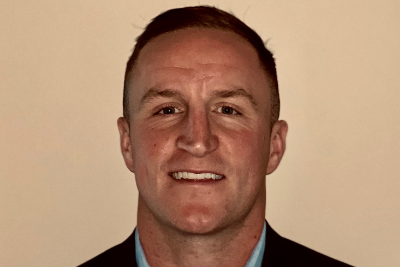 Mark Glicini
 Mark Glicini: Oct 1, 2026, 6:59:59 PM
.png)
.png)
.png)
.png)